

Let’s clean up the dirty packaging industry
Why we exist
OUR BEEF WITH FOSSIL FUELS
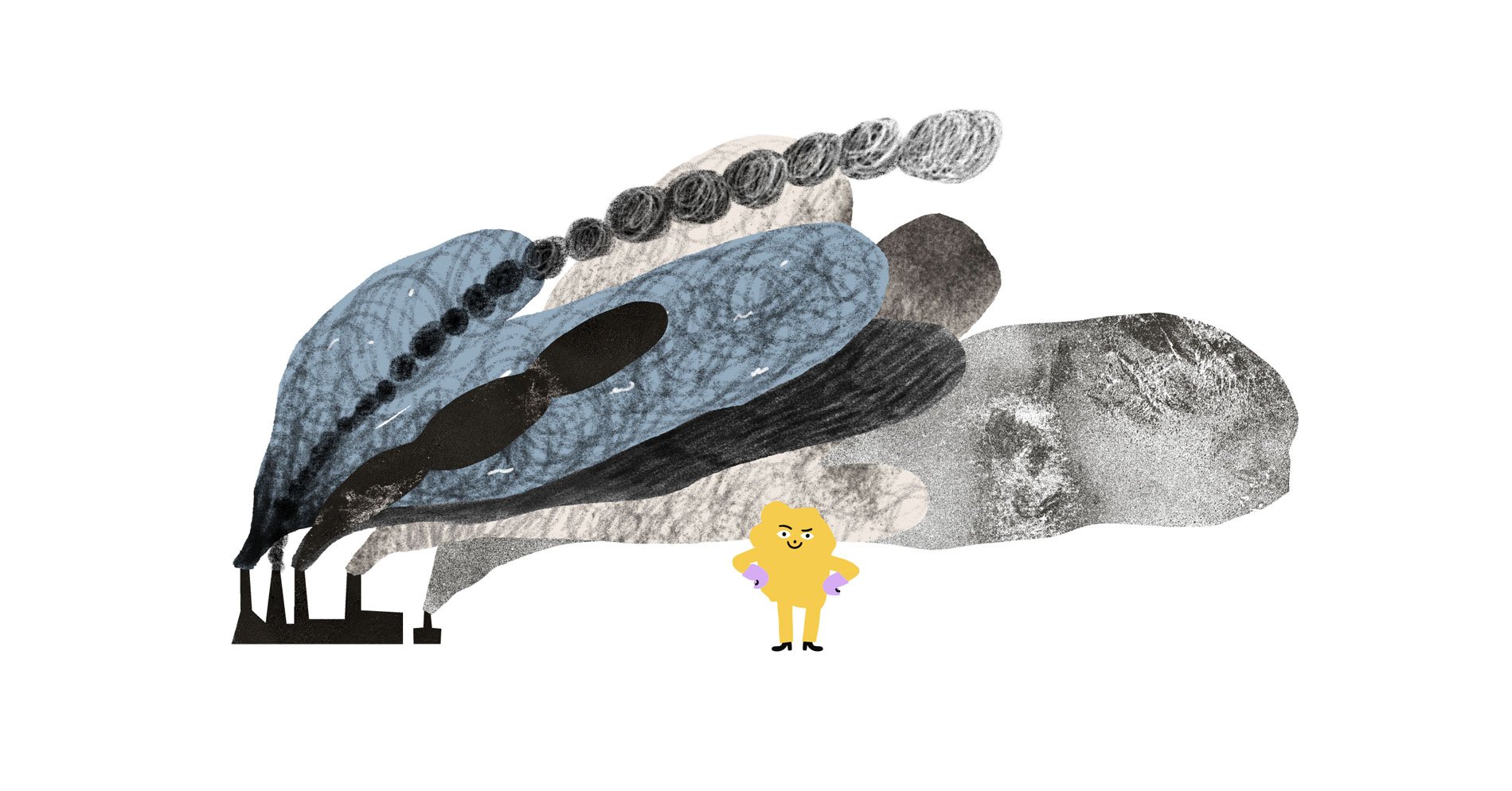
Burning fossil fuels is heating the planet
Human activity adds to the natural greenhouse effect causing the Earth’s temperature to rise. It’s a fact.
The primary source of man-made CO2 emissions? Burning fossil fuels. Yet many industries depend heavily on fossil fuels – including the packaging industry.


AND WITH SINGLE-USE PLASTIC PACKAGING
Single-use mindset is pouring fuel on fire
Plastics make a great packaging material. They’re durable, super lightweight, low cost and easily recyclable – in theory.
But plastic has another major problem (in addition to dependence on fossil fuels) — the supply chain of plastic packaging is built to be linear. The precious material we drain from Earth’s crust turns into garbage after just one use.
OUR SOLUTION
Not perfect, but better
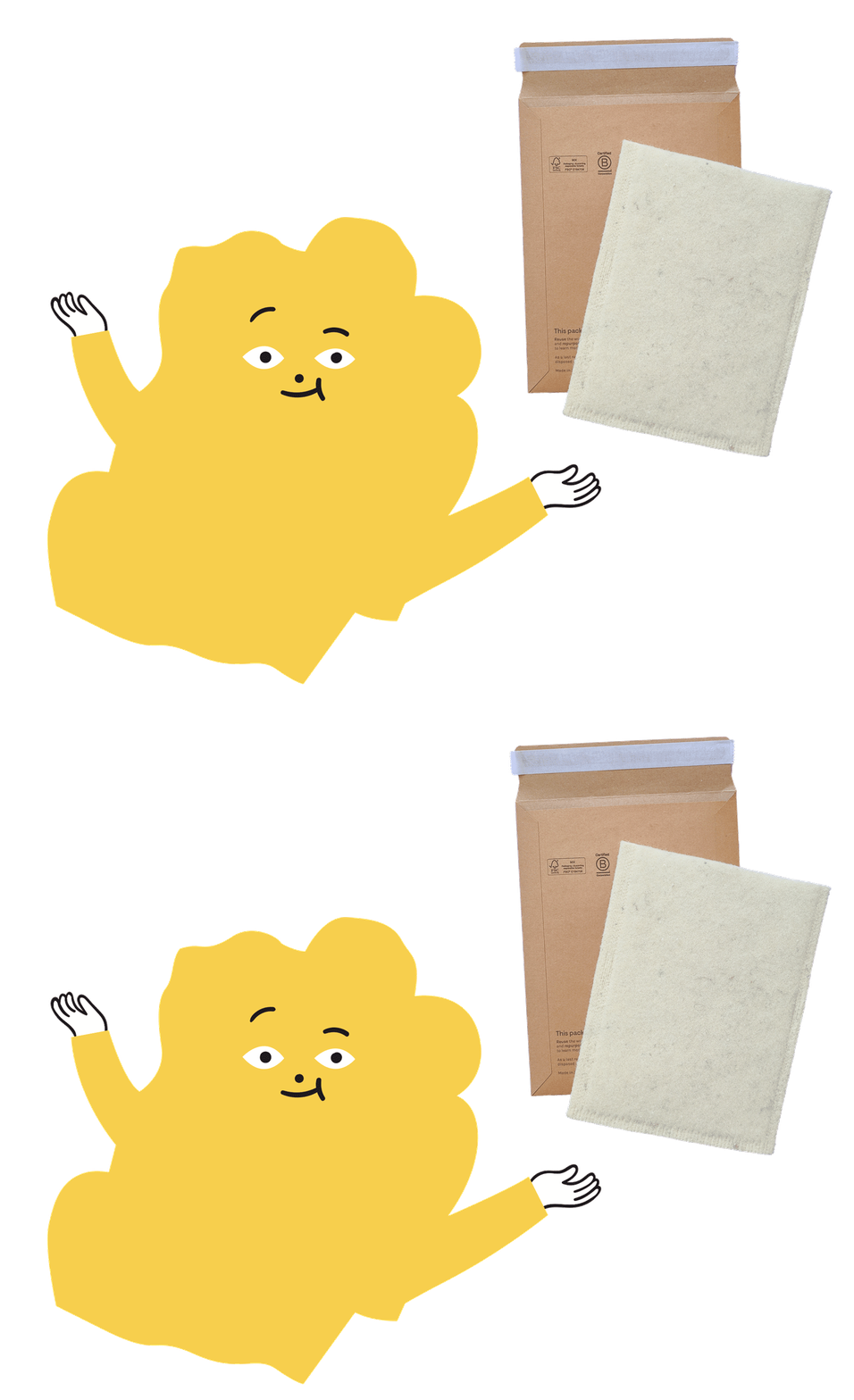
We founded Woola to replace plastic bubble wrap with a wonderful regenerative material that would otherwise go to waste – sheep wool.
Replacing bubble wrap with surplus wool is just the starting point. What we’re really aiming to do at Woola is to shift the single-use mindset and make sure ecommerce packaging does not rely on fossil fuels.
Read more about Woola’s circular future on our blog.

Woola is a Certified B Corporation with a score 109.1.
“You can’t be the referee and the player. We needed a set of rules and an external party to audit them in order to know if we’re going in the right direction.” – Anna-Liisa Palatu, CEO and co-founder of Woola
Reporting
Our 2025 Sustainability report in all its glory. This is the long version that includes all of our data and goals.
The short and sweet version of our 2025 Sustainability report.

A working document that summarizes all of our impact results in one place. We update this in real time.
The materials that make Woola ✨
The materials that make Woola ✨

Wool
We use leftover wool to make our products. This type of wool is so coarse that it cannot be used to produce yarn for the textile industry and is, therefore, usually burned or buried. Despite being rough, it still has all the great qualities of wool.

Paper
We use recycled paper for the outer layer of our Wool Envelope. Wool and paper layers are not glued or attached to each other to make it easy to separate the two for recycling. Both the paper itself and the envelopes are produced in Poland.

Where does our wool come from?
We used to rely mostly on local Estonian wool. To scale our impact from 2026 onwards, we are transitioning to primarily use British wool.
Partnering with British Wool, a farmer-owned co-operative, gives us access to a fully transparent and verified system backed by tens of thousands of farmers. Our Estonian wool will currently remain as a smaller, but important, part of our supply.

Using undervalued leftover wool
We intentionally use mixed-quality wool that the modern textile industry overlooks. Sheep must be shorn annually for their health, but this coarse wool often goes to waste.
By buying it, we create demand for a severely undervalued material. We ensure farmers receive fair compensation for their work, and we keep processing minimal by washing the wool only once to reduce our footprint.

The Know Your Wool process
But how do we ensure the wool comes from farms with high animal welfare standards? Just like the financial sector has a Know Your Customer process, we rely on a strict Know Your Wool approach.
By working with British Wool, we partner with a global leader. The International Wool Textile Organisation recognizes the UK as having the strictest animal welfare laws in the world. We know with total confidence that the sheep providing our wool are well treated because every batch is fully traceable to farms that are held accountable to these strict standards and laws.
OUR PRODUCTION
Made in Paldiski
All Woola products are made in our factory in Paldiski, Estonia. It’s a small town with just 3,680 inhabitants, located on the North-Western coast of Estonia.

+ Why we picked Paldiski
The town of Paldiski has a unique history – it fell under the Red Army in 1939 and was turned into a Naval Base. In 1960, the city was completely closed to the public and kept secret. All development in the region was halted and the city was closed off with barbed wire until 1994. This is why we’re happy to support its redevelopment in the 21st century.
Paldiski is home to many manufacturing companies, but most of these specialise in metallurgy and heavy machinery. This means the jobs these companies offer are physically really demanding. Our processes are not, so we can provide suitable jobs to people who can’t work in such positions.
We were also drawn to the peninsula’s autonomous renewable energy grid that provides a part of our factory’s energy usage.
People
All of our employees play a role in Woola's future, so we've made everyone a partial owner. Everyone, from the department heads to production operators get stock options that turn into equity after vesting.
Additionally, Woola employees get sports compensation and additional days off, as a reminder to rest regularly.
We also pay our people well. As an example, our production team is compensated 26% above the average salary of €1459 for their field (manufacturing of textiles). That’s also 10% above average in manufacturing in general, where the average gross wage is €1651 (Statistics Estonia, as of Q4 2024).
We only hire employees through an FTE agreement, which grants them health insurance and access to unemployment benefits.

Environment
Doing something about climate change is why Woola started. Besides replacing as much plastic with wool as possible, we ensure we take responsibility for how we do it.
Our mission – to stop the worst climate doomsday scenarios from happening – works as a compass when making decisions, whether it’s regarding product development or production waste management.
Waste minimisation
Our goal is to reach zero waste production. Getting there means gradually improving the production methods to generate as little waste as possible until we reach zero.
Additionally, we upcycle wool residues of the production, developing them into future products. See below what’s currently in the works and what’s already done to minimise waste.
+ Some things that are already done
✔️ We are shredding wool residues that are left over as we make our products — and we’re developing a new product that will be made of shredded material.
✔️ We replaced plastic film with reusable pallet nets and pallet straps for securing boxes in transportation.
✔️ We are recycling all the plastic film that our vendors send us.
✔️ We are piloting a reusable cardboard box delivery solution with one of our clients.
✔️ We set up minimum order quantities to avoid shipping half-empty boxes.
✔️ And of course, we separate all waste according to its category: paper, packaging, and biowaste.


Responsible supply chain
We work closely with our suppliers to ensure that all materials used in Woola packaging are responsibly sourced, traceable, and meet our high standards for sustainability and ethics. Our Supplier Code of Conduct sets clear expectations for environmental responsibility, ethical business practices, and transparent collaboration across our value chain.
END OF USE
Reuse or recycle

Reuse
Customers can reuse Woola’s packaging as it’s in good shape or get creative and upcycle the wool in a DIY project.

Return
There’s no accessible circular system for wool, so we’re creating our own. Our circular system pilot launched in 2021.

Recycle
We’ve made separating paper and wool easy – so you can recycle the paper and reuse or dispose the wool.
Follow our journey on social media